

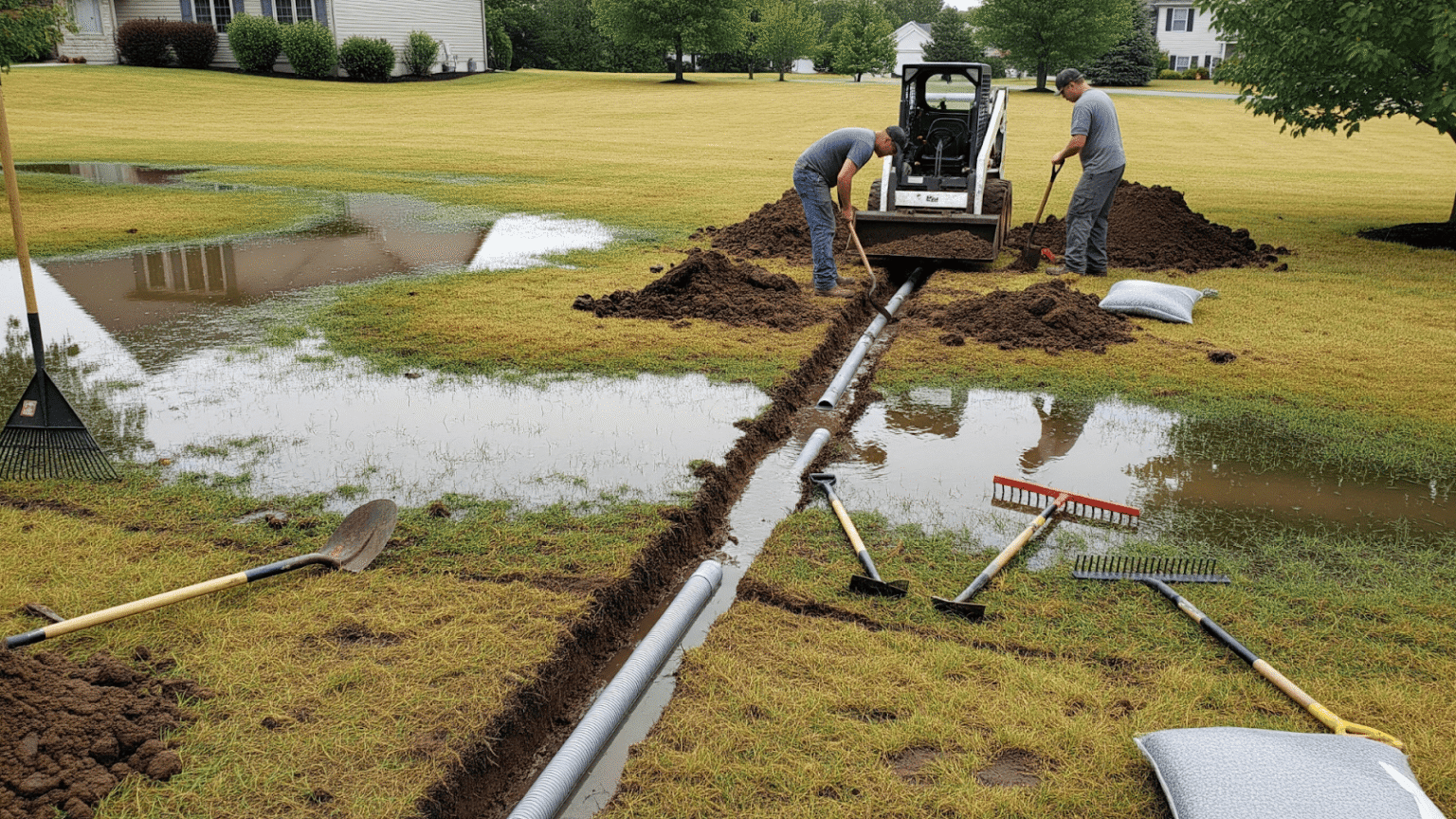
| Summary Waterlogged lawns can damage grass, compact soil, and affect your home’s foundation. Identifying the cause—such as soil type, compaction, grading, or drainage issues—is the first step. Solutions include aeration, top dressing, regrading, raised beds, French drains, and rain gardens. Professional help may involve soil testing, hiring drainage contractors, or consulting a landscape architect. Prevent future issues by managing watering, reducing foot traffic, and planting water-tolerant species. Exotic Creations LLC can design and install effective drainage systems tailored to your property. |
A green lawn should be easy to enjoy—not squishy and waterlogged. Yet after heavy rain, many homeowners deal with soggy lawns that don’t drain properly. According to FEMA, any area with even a 1% annual chance of flooding carries a serious risk—it’s equivalent to a one-in-four chance over a 30-year mortgage.
If left unattended, these puddles can kill grass, harm soil, and even damage your home’s foundation.
But you don’t have to live with it.
With the right yard drainage solutions, you can channel water away, bring your lawn back to life, and enjoy your yard again—whether it’s as simple as aerating or as involved as installing a rain garden.
First Things First – Identify the Cause
To address a waterlogged lawn, start by identifying the cause of the problem.
Common causes are:
- Soil Type: Heavy clay soil retains water and compacts easily, leading to poor drainage.
- Compaction: Foot traffic or heavy machinery compresses the soil, preventing water penetration.
- Grading Issues: Sloping toward the house or low spots can trap water.
- Downspout Drainage: Water from gutters may be dumped directly into problem areas.
- Underlying Drainage Problems: High water tables or blocked drainage lines may require professional attention.
Once you pinpoint the cause, choosing how to fix drainage in yard spaces becomes much easier.
Step 1: Aerate and Loosen the Soil
Start with aeration, in case your soil is compacted.
- If you have clay soil, aerate once or twice a year.
- To improve structure, follow with compost or a mix of sand with soil (known as top dressing).
- Water can also penetrate stubborn wet areas by dethatching or removal of the dead grass cover.
Step 2: Improve Soil and Lawn Grading
Poor grading is a leading cause of pooling water. If your lawn slopes toward your home, regrading can direct water away.
- Aim for a gentle slope (about 2% grade) away from the foundation.
- Fill low spots with soil and compact lightly.
- If regrading the entire yard feels overwhelming, focus on small problem zones first.
Step 3: Build Raised Beds in Trouble Spots
In persistently soggy areas, raised beds can help you grow plants without drowning their roots.
- Use untreated wood, stone, or brick to create a border.
- Fill with a mix of compost and sandy soil for better drainage.
- Perfect for vegetable gardens or flower beds in low-lying areas.
Step 4: Try a Rain Garden
A rain garden is a shallow depression filled with moisture-loving plants. It absorbs runoff while looking beautiful.
Why it works
- Slows water movement.
- Deep roots break up compacted soil.
- Attracts pollinators.
Step 5: Compare Popular Drainage Fixes

| Drainage Solution | Best For | Difficulty Level | Long-Term Effectiveness |
| French Drain | Chronic water pooling in the lawn | Moderate | High |
| Rain Garden | Slow absorption and beautification | Easy-Moderate | High |
| Dry Creek Bed | Redirecting water while adding landscape | Moderate | Medium-High |
| Downspout Extensions | Water near the foundation | Easy | High |
| Yard Re-grading | Incorrect slope | Hard | Very High |
| Raised Beds | Low spots with plants | Easy | Medium |
Step 6: Install French or Trench Drains
If you’re exploring how to improve backyard drainage with a long-term fix, French drains are worth considering.
French Drain:
- Gravel-filled trench with perforated pipe.
- Redirects water away from problem areas.
Trench Drain:
- Surface-level channel with a grate.
- Best for paved areas with runoff.
Step 7: Add a Dry Creek Bed
Dry creek beds are decorative yet functional. They channel water naturally and prevent erosion while looking like part of your landscaping.
Step 8: Extend Downspouts
Water near your foundation can quickly become a yard drainage nightmare. Downspout extensions carry water at least 6–10 feet away, ideally into a rain garden or gravel bed.
Step 9: Switch to Permeable Surfaces
If patios or driveways are pushing water toward your lawn, consider:
- Permeable pavers
- Gravel paths
- Wooden decking with spacing
When to Call in the Experts
Sometimes, DIY isn’t enough. For persistent issues, professional landscapers can help:
- Soil Testing – Reveals nutrient balance and drainage capacity.
- Landscape Architects – Create a custom drainage design.
- Drainage Contractors – Install French drains, sump pumps, or complex systems.
If you’re unsure who to call for drainage problems in your yard, start with a licensed drainage contractor or landscape company.
Maintenance for Long-Term Success
Even the best yard drainage solutions need upkeep.
| Maintenance Task | Frequency | Why It Matters |
| Clear leaves from gutters | Every 1–2 months | Prevents overflow into the yard |
| Check French drains for clogs | Twice a year | Keeps water flowing |
| Inspect downspout extensions | Every 3–4 months | Ensures proper water direction |
| Trim rain garden plants | As needed | Maintains absorption rate |
General Tips for Preventing Waterlogging
- Avoid Overwatering – Let soil dry between watering sessions.
- Minimize Foot Traffic – Prevent further compaction in wet areas.
- Plant Water-Tolerant Species – Switch to plants that thrive in damp soil.
Putting It All Together
Improving drainage is about tackling the root cause. For small problems, aeration, rain gardens, and top dressing may be enough. For bigger challenges, French drains, regrading, or sump pumps may be necessary.
By combining practical steps with regular maintenance, you can turn a swampy lawn into a healthy, usable space. The key is acting early before drainage problems damage your yard or home foundation.
Need Professional Drainage Help?
Don’t let a waterlogged lawn ruin your property’s beauty or safety. Exotic Creations LLC specializes in customized lawn and landscape drainage solutions that fix problems at the source. From French drains to complete regrading, our team ensures your yard stays healthy and functional year-round.
Contact us today for a free consultation and get your outdoor space back in top shape.
FAQs
Q1: How to fix a poorly draining yard?
Start by identifying the cause—soil compaction, grading issues, or gutter overflow—then choose a targeted fix such as aeration, regrading, or installing a French drain.
Q2: How much does it cost to fix backyard drainage?
The cost depends on several factors, including the size of your yard, the severity of the drainage problem, the type of solution chosen (such as regrading, French drains, or rain gardens), local labor rates, and whether you opt for a DIY approach or hire professionals.
Q3: Who to call for drainage problems in the yard?
Hire a drainage contractor, landscape company, or civil engineer specializing in yard and foundation water management.
